Posts

Words of The Week: #6

Image
Words of the Week: #6 1) Pretend Reading- a paraphrase or spontaneous retelling told by students as they turn the pages of a familiar story book.  (Bear, Donald R., et al. Words their Way, Pearson, 2020.) Pretend reading is sort of the beginning step to actually start reading. It's considered a part of the emergent stage of reading. The child may not necessarily know words or how to form sentences, but they are trying to read. They are making the effort.  https://blogger.googleusercontent.com/img/b/R29vZ2xl/AVvXsEi6kwIu9zLOxyMCss0RZTa0RIdvQDpqhjIIBEH25GGQERswszw5XOsPy_BiGdTyiz6uIUKzezxpsCheYgOhwxCt-OpFhqoL83d6ahNqH-u0zsgVRTa3ObN2cBdJ48h8q8hmKmeFjDkCd36l/s1600/photo+2+%25287%2529.JPG 2) Memory Reading- an accurate recitation of text by finger-point reading.  (Bear, Donald R., et al. Words their Way, Pearson, 2020.) Memory reading is when the child memorizes the words or sentences of a book. They don't really have trouble remembering how to sa...

Words of the Week: #5

Image
Words of the Week: #5 1) Spelling Inventory- an assessment that ask students to spell a series of increasingly difficult words used to determine what spelling features students know or use but confuse, as wells as a specific developmental stage of spelling. (Bear, Donald R., et al. Words their Way. Pearson, 2020.) Spelling inventories are important because it really allows the teacher to determine how well a student is doing with spelling. They get to see what stage of spelling they are at and they can see the patterns that student may use when trying to spell a word. After they get the results, they can target certain areas that child needs help with and they can just use the inventories to see improvement over time. Photo: https://www.themeasuredmom.com/wp-content/uploads/2013/06/spelling-inventory-2b1-590x410.jpg 2) Static Reversal- a handwriting error that is the mirror image of the intended letter ( b for d, or p for d). (Bear, Donald R., et al. ...

Words of the Week: #4

Image
Words of the Week: #4 1) Invented Spelling- it's also known as spelling "as best as you can." It allows students to write even before they can read during the emergent stage. (Bear, Donald R., et al. Words their Way. Pearson, 2020.) It's important because it's sort of the first step in learning how to correctly spell words. It allows them to build their problem solving skills. They figure out how they think a certain word is spelled. As they practice and practice, they may get better and be able to spell words correctly. Once they are told the correct spelling of a word, then they will start picking that up and know how to spell it correctly the next time they try to spell it. Invented spelling just lets kids be creative, which is essential because school kills creativity as they get older. Photo: https://sites.google.com/site/earlyliteracycoachingshuedr505/_/rsrc/1447808099144/early-writing/Her-First-Invented-Spelling-Story-5.2.14.jpg?height=300...

Words of the Week: #3

Image
Words of the Week: #3 1) Interactive Writing- grounded in cognitive and sociocultural theories of learning. The cognitive processes are situated and developed within a writing activity that is socioculturally constructed by teacher and students. The purpose of interactive writing is to mediate students' understanding of what it means to write. Lessons are how-to oriented; teachers model what students are expected to do during independent writing. The lesson begin with the teacher and students collaboratively planning the text they will write, often revising the oral message several times. Then, the teacher and students "share the pen" to write the oral message on a large writing tablet, word by word.  (Williams, Cheri. "Learning to Write with Interactive Writing Instruction". The Reading Teacher, vol.71, no.5, 2017, pp.523-532.) Interactive writing is important because it helps younger students learn how to write. They get time to really work on imp...

Words of the Week: #2

Image
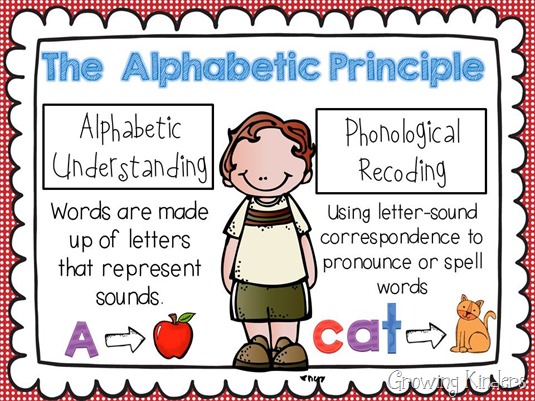
Words of the Week: #2 1) Alphabetic Principle- an orderly relationship in which the graphemes of written language represent the phonemes of oral language.  ("From Phonemic Awareness to Fluency") The alphabetic principle is important because it's understanding that letters represent sounds that form words. It's very important for a child to understand the alphabet and be able to make the sound each letter has. Eventually, they will be able to form words. This is extremely important because this is laying down the foundation for what is to come: forming sentences, speaking, reading. Photo: https://blogger.googleusercontent.com/img/b/R29vZ2xl/AVvXsEgRPfvBeVY8al_pUAa3S27sWyoXPMvQTOyOE-uKmzE15L4gHe5KEupRAQSVI3y6mNpTVm_L_FtLOy2SOqnkKCiuNSx3TpW-ub7HjNZZ_fs8uK8-SGENysc9ChQJFfyP0vET9wEtxrNA9zT0/?imgmax=800 2) Concepts of Print- children's knowledge of the conventions of printed English. ("From Phonemic Awareness to Fluency") Concepts of print is...

Words of the Week: #1

Image
Words of the Week: #1 1) The Great Debate : the Great Debate is a conflict between two different viewpoints on reading instruction. The Comprehension Hypothesis claims that we acquire language and develop literacy when we understand messages, by listening or by reading. The Reading Hypothesis claims that reading for meaning is the source of our competence in literate language; reading is the way we acquire (subconsciously absorb) vocabulary, spelling, writing and grammatical competence. (Krashen, Stephen. "The Phonics Debate: 2004". Language Magazine, 2004.) I think The Great Debate is important because it's something that teachers should be aware of, especially if they are teaching reading. They get to determine what side they are on and what is beneficial to their students. They may even incorporate both into their classroom. Photo: http://listentoread.com.au/wp-content/uploads/2016/11/A-B-C.jpg 2) Systematic Intensive Phonics Instruction : an attempt ...